
When a preschool start is getting closer, it is natural to wonder, “How will I know if my child is ready?” The most reassuring answer is that school readiness is not one skill. It is a collection of small, growing abilities that look different from child to child. A child can be ready to begin while still needing help with goodbyes, buttons, big feelings, or joining a group.
Instead of looking for a pass-or-fail moment, notice how your child manages ordinary parts of the day. What feels easy? What takes extra time? What helps them recover when something changes? Those observations are useful because they lead to practical support, not pressure.
Start with a strengths-based picture
School readiness includes communication, social and emotional growth, early thinking, movement, and daily routines. These areas develop together, but not always at the same speed. A child may love stories and still need time to warm up with peers. Another may confidently put on a backpack but need a familiar adult to help with words when frustrated.
The National Association for the Education of Young Children describes developmentally appropriate practice as a strengths-based, play-based approach that responds to each child’s age, individuality, and context. That is a useful lens for families too. Notice what your child already brings: curiosity, humor, persistence, a favorite way to communicate, or a strong interest that helps them connect. Then ask what support would make the next step feel possible.
For a closer look at the everyday experiences children build in a classroom, see our family guide to what children learn in preschool. It can help turn broad worries about readiness into ordinary moments you can recognize.
Watch the day, not one performance
Children do not always show their full range of skills on command. A child who is quiet with a new adult may tell an elaborate story at home. A child who knows how to clean up may forget when they are hungry or excited. That does not mean the skill disappeared. It means the setting matters.
Early childhood guidance encourages adults to observe children across play, conversations, group activities, and familiar routines. That approach gives a more accurate picture than asking a child to perform a skill once. Try keeping a few short notes for a week. You might write, “Asked for help opening lunch,” “Waited for a turn after a reminder,” or “Stayed with Grandma for 20 minutes and settled after a hug.” Small, specific observations are easier to share with a teacher than a general feeling that something is going well or badly.
Ask yourself three simple questions: What does my child enjoy? When do they need the most support? What changes when we slow down, offer a choice, or practice together? The answers help you choose a next step that fits your child rather than a generic plan.

Notice communication in real moments
Communication readiness is not about perfect pronunciation or long conversations. It is about whether your child has a reliable way to share needs, choices, feelings, and ideas. Some children use words, while others may use gestures, signs, pictures, a communication device, or a mix of approaches. The goal is to make sure adults understand how your child communicates best.
Listen during snack, bath, play, and errands. Can your child let you know they need help? Do they respond to simple directions when the moment is calm? Can they take part in a back-and-forth exchange in their own way? You can build these skills without flashcards. Narrate a routine, pause for your child’s response, and give simple choices such as “red cup or blue cup?”
The CDC notes that play, learning, speech, behavior, and movement all offer clues about development. Its milestones for age three include joining other children to play and using back-and-forth conversation. Milestones are conversation starters, not a classroom entrance exam. If a child uses more than one language or has a different communication style, share that with the school from the beginning.
Look for growing comfort with people and feelings
Preschool brings more children, new adults, shared materials, waiting, noise, and unexpected changes. No child needs to handle all of that perfectly before the first day. What helps is a growing ability to seek comfort, accept support, and try again after a hard moment.
Notice how your child responds around other children. They may watch first, play alongside another child, bring over a toy, or use a familiar phrase to join in. Each can be a meaningful step. At home, you can practice language for common moments: “Can I play?” “Help, please,” “My turn next,” or “I need a break.” Our social skills activities for preschoolers offer low-pressure ways to practice those moments through play.
Goodbyes deserve the same patience. A child may cry and still be capable of settling with a caring teacher. A short, predictable handoff gives them a clear beginning to the day. If separation feels especially hard, our calm drop-off guide can help you create a routine that feels steady rather than rushed.
See independence as participation, not perfection
Self-help skills make a school day smoother, but preschoolers are still learning. The useful question is not “Can my child do every task alone?” It is “Can my child take part, try, and get help when needed?” Putting a backpack on, washing hands, using a fork, pulling down loose pants, and helping with cleanup all give a child a little more confidence in the classroom.
Give your child a real role at home. They can place napkins on the table, choose between two shirts, carry a small item to the car, or put books in a basket. Break tasks into simple steps and allow extra time. If a zipper is frustrating, hold the bottom while your child pulls. If a lunch container is tricky, practice opening it before school begins. Effort counts because it teaches a child that help is available and trying is worthwhile.
The CDC’s preschool parenting guidance recommends simple choices, age-appropriate chores, and helping children work through a problem when they are upset. These are practical ways to practice the same participation a classroom asks for each day.
Pay attention to play, curiosity, and problem-solving
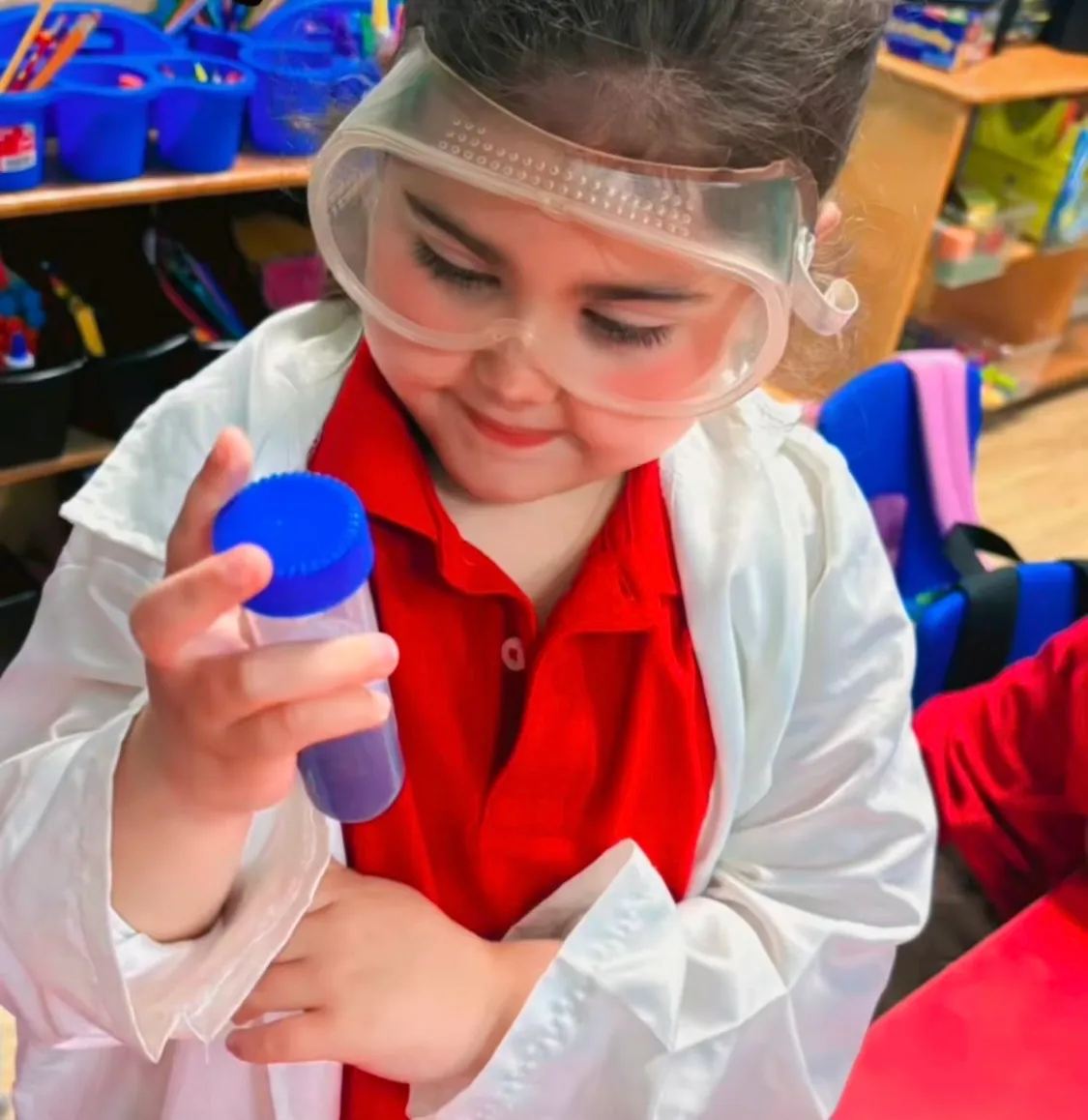
Early learning is often easiest to see in play. A child sorting toy animals, wondering why a block tower fell, pretending to cook, retelling part of a story, or trying a new way to fit a puzzle piece is already practicing important thinking skills. There is no need to turn these moments into quizzes.
Follow your child’s interest and add one small invitation. If they are building, ask, “What could make it stronger?” If they are drawing, ask them to tell you about the picture. If they are setting up a pretend store, offer a few objects to sort or count. Then let their idea lead. The National Association for the Education of Young Children explains that high-quality preschool learning happens through active, hands-on play, guided experiences, and connections to what a child already knows.
For more ideas that fit into a normal afternoon, try these preschool activities at home. Choose the activities your child enjoys rather than trying to complete a long list.
Use school readiness to plan, not compare
Readiness conversations can become stressful when they turn into comparisons. One child may be chatty, another observant. One may be eager to climb and move, another happiest with a book or a small pretend world. Those differences are part of who children are. A useful readiness check does not ask which child is ahead. It asks what conditions help this child participate and grow.
Try choosing one goal that connects to a real part of the school day. If mornings feel hurried, practice putting shoes by the door and choosing clothes the night before. If a child is worried about asking for help, practice a short phrase with a stuffed animal. If transitions are hard, give a two-minute warning before cleanup. Keep the goal small enough that your child can experience success, then notice the effort rather than demanding a polished result.
Bring that same approach to conversations with a teacher. You might say, “My child takes a little time to join a group, but loves helping with a job,” or “They use a gesture when they need a break.” Details like these help a classroom team welcome a child well. They are far more useful than trying to label a child as ready or not ready.
A simple readiness conversation
Once a week, choose one ordinary moment and use it to notice, not grade, your child.
- What did my child try independently?
- How did they let an adult know what they needed?
- What helped them join, wait, share, or recover from a disappointment?
- What activity made them curious or proud?
- What is one small skill we can practice playfully this week?
- What would be useful for their teacher to know before the first day?
You do not need a perfect answer to each question. A few observations give your family and the classroom team a thoughtful starting point.
Know when to ask for another perspective
Families know their children best, and a concern is worth sharing. Talk with your child’s pediatrician if your child has lost skills, is not meeting one or more developmental milestones, or you have another concern about development. The CDC recommends sharing those observations and asking about developmental screening. Screening can point to whether a closer evaluation would be useful; it is not a label or a diagnosis.
Teachers can offer another helpful perspective, especially after they have seen your child in a group setting. Ask what they notice during arrival, play, meals, transitions, and cleanup. A good partnership focuses on strengths, the supports that work, and one realistic next goal. If your child already works with a therapist or other professional, ask how home and school can reinforce the same simple strategies.
Readiness can also be shaped by sleep, a recent move, a new sibling, language, sensory needs, or simply the fact that something is unfamiliar. A thoughtful plan makes room for all of that. It does not ask a child to fit one narrow picture of how preschool should begin.
How Kids Now Academy can help
At Kids Now Academy, we look at children as whole people, not checklists. Our classrooms give children room to communicate, play, build relationships, practice routines, and get help when they need it. Families can share what helps their child feel comfortable, whether that is a familiar phrase, a favorite interest, a communication support, or a little extra time to settle in.
Our age-appropriate programs build everyday skills through stories, counting, creative activities, play, and familiar classroom routines. Children practice communication, cooperation, and independence as they prepare for their next stage of learning.
Common family questions
School readiness in preschool FAQ
Is there a test to tell whether my child is ready for preschool?
A checklist can help you notice patterns, but it cannot tell the whole story. Children show what they know differently depending on the setting, their language, their temperament, and how safe they feel. A conversation with your child’s teacher and, when needed, pediatrician gives a fuller picture than one test.
Does my child need to know letters and numbers before preschool?
No. Preschool is a place where children build early literacy and math ideas through stories, conversation, play, music, and hands-on exploration. It is more helpful for a child to have ways to communicate, ask for help, and join a routine than to arrive with academic answers memorized.
What should I do if my child is not ready in one area?
Choose one small, useful next step instead of trying to practice everything at once. A child who needs help at drop-off may benefit from a steady goodbye routine. A child who struggles with a zipper may practice with a favorite jacket. Share what you notice with the teaching team so home and school can use the same support.
When should I talk with my child’s doctor?
Talk with your child’s doctor if your child has lost skills, is not meeting one or more developmental milestones, or you have another concern. Your observations matter. The doctor can discuss developmental screening and the right next step for your child.

